
Issue 11 | October 2026
A periodic publication by 3AM Hospitality Consulting.
Why Philippine tourism continues to lag Southeast Asia despite everything we have going for us

I have worked in hospitality for more than 30 years, much of it around Southeast Asia, and there is something about Philippine tourism that has bothered me for a long time.
We keep talking about our enormous tourism potential, yet when the results disappoint, we seem to go back to many of the same answers. Visitor numbers fall short, so perhaps we need another marketing campaign. We get Michelin stars and Michelin Keys and understandably celebrate them. We build Tourist Rest Areas and announce programs to improve public toilets.
There is nothing wrong with any of these things. Good marketing matters. International recognition is good for our restaurants, hotels and the people behind them. And yes, every decent tourism destination should have clean public toilets.
But the bigger question is whether any of this addresses the reasons we continue to lag many of our Southeast Asian neighbours. Perhaps instead of asking what else we can promote, we should be asking what is actually holding us back.
If this were one of my hotels and the numbers kept missing budget, I would not begin with another slick advertising campaign. I would go back to basics and ask very pointed questions. Is our product good enough? Can guests get to us easily? Does the infrastructure work? Are we making it unnecessarily difficult for customers to do business with us? Are we investing in the right things? And if the numbers keep missing expectations, who is accountable for fixing them?
I think Philippine tourism deserves the same tough love.
In 2019, the Philippines welcomed a record 8.26 million international visitors. In 2025, the headline visitor count was 6.48 million—5.94 million foreign visitors and just over half a million returning overseas Filipinos. Six years after our record year, we were still well below it. [1]
That doesn’t mean Philippine tourism is failing. Domestic tourism is doing much of the heavy lifting. In 2025, domestic tourism expenditure at current prices grew 3% to PHP 3.26 trillion, while inbound tourism expenditure fell 6.4% to PHP 698.46 billion on the same basis. Tourism still contributed 8.1% of GDP, and tourism industries employed 7.7 million people. [2]
My concern is much more specific. After decades of talking about the Philippines’ extraordinary tourism potential, our international performance still isn’t where it should be.
International arrivals against 2019 levels
| Market | 2019 arrivals, millions | Comparison arrivals, millions | Comparison year | Change from 2019, rounded |
|---|---|---|---|---|
| Thailand | 39.8 | 33.0 | 2025 | −17% |
| Malaysia | 26.1 | 25.0 | 2024 | −4% |
| Vietnam | 18.0 | 21.2 | 2025 | +18% |
| Indonesia | 16.1 | 13.9 | 2024 | −14% |
| Philippines | 8.26 | 6.48 | 2025 | −22% |
Selected national series; comparison years and definitions differ. This is not a uniform 2025 ranking. Malaysia excludes same-day visitors; the Philippines includes non-resident Filipinos. Figures and changes are rounded. Sources: Philippine DOT, TAT, Tourism Malaysia, Vietnam’s National Statistics Office via Government News, and BPS Indonesia; see source notes and visual definitions.
We don’t have a tourism-potential problem
The Philippines has extraordinary raw material. We have Palawan, Boracay, Siargao and Bohol, but also hundreds of places that international travellers barely know. We have beaches, diving, mountains, biodiversity, food and culture. And we have Filipinos who are naturally good at hospitality.
I don’t think our fundamental problem is convincing people that these things exist. The harder task is converting what we have into a tourism product that is easy to buy, easy to reach and worth investing in.
If you wanted one of Asia’s most naturally gifted tourism countries to underperform, what would you do? You would make many of its best destinations difficult to reach. You would have weak connections between them. You would allow tourism development to run ahead of roads, airports, water, sewage and waste infrastructure. You would make investment slower and more complicated than it needs to be. You would divide responsibility for the visitor experience across numerous institutions, so everybody owns a piece of the problem but nobody really owns the result.
Then, when the numbers disappointed you, you might be tempted to change the marketing.
Marketing still has a job to do. There have been periods in Philippine tourism when stronger promotional activity coincided with rising inbound expenditure. [3] But it works best when the product behind it works.
If a hotel is difficult to reach, the rooms aren’t ready and the elevators keep breaking down, a brilliant advertising campaign might get more people through the door. It has not fixed the hotel. That is what I mean when I say you cannot market your way out of a systems problem.
A 2025 tourism sector review published in the PIDS Discussion Paper Series arrived at a similar diagnosis. It identified infrastructure, connectivity and competitiveness among the constraints holding Philippine tourism back. When the research was presented the following year, PIDS Senior Research Fellow John Paolo Rivera put it very simply: “The issue here is not just demand. The issue here is systems.” [3]
I saw what a different approach looked like
When I worked in Singapore, my experience with the Singapore Tourism Board was very different.
Our hotel had someone from STB who dealt with us regularly. I can’t remember her exact title, and I don’t want to invent one now, but I remember very clearly what she did. She behaved almost like a sales account manager for the destination.
She would visit us periodically, ask what was happening in the business and see where STB could help. Sometimes the issues were relatively small. At other times they involved government support, manpower or changes in technology. STB also brought the industry together through seminars and other initiatives because there was an understanding that making individual tourism businesses stronger ultimately made Singapore stronger as a destination.
That experience stayed with me. STB was not simply selling Singapore. It was working on the business of tourism.
You can still see that philosophy today. STB supports tourism businesses with technology, productivity, business-model improvements and new experiences. It has dedicated support for business events and MICE. Its Tourism 2040 strategy is explicit about pursuing quality growth, with tourism receipts expected to grow faster than visitor arrivals. [4]
Singapore is a city-state, and the Philippines is an archipelago of more than 7,000 islands. Our geography, scale and institutions are different, and STB alone does not explain Singapore’s success. What I think is worth studying is the mindset.
Singapore thinks deliberately about what kind of tourism it wants, which customers it wants to attract, what prevents the industry from delivering it and where government can help. In 2025, for example, STB said a MICE visitor spends on average almost twice as much as a leisure visitor, and set an explicit objective of tripling MICE tourism receipts by 2040. [5]
That is not simply destination marketing. It is managing tourism as a business.
Our geography is difficult. That isn’t an excuse.
I also worked in Bali, which is why I have never found our geography a sufficient explanation for our performance.
Geography matters, and moving visitors around an archipelago is more difficult and expensive than moving them around a city-state.
But Indonesia is also an archipelago. In 2025, Bali recorded 6.95 million direct foreign tourist arrivals—roughly the scale of the Philippines’ entire visitor count that year. The measures have different coverage, including non-resident Filipinos in the Philippine total, so this is a comparison of scale rather than a like-for-like ranking. [6]
Bali has plenty of problems of its own. Anyone who has spent much time there knows about the traffic, infrastructure pressure and consequences of rapid tourism development. Its success is not for us to copy wholesale.
Bali offers an example of a concentrated tourism destination connected to international demand. In 2025 alone, more than 39,000 international flights departed through Ngurah Rai International Airport. [7] That number shows the scale of access; it does not, by itself, explain Bali’s success.
The Philippines cannot change its geography. What we can change is how much friction that geography creates for the visitor.
Think about a traveller planning Palawan, or combining Bohol and Siargao. The connections should be clear, the transfer time realistic and the journey manageable without local knowledge.
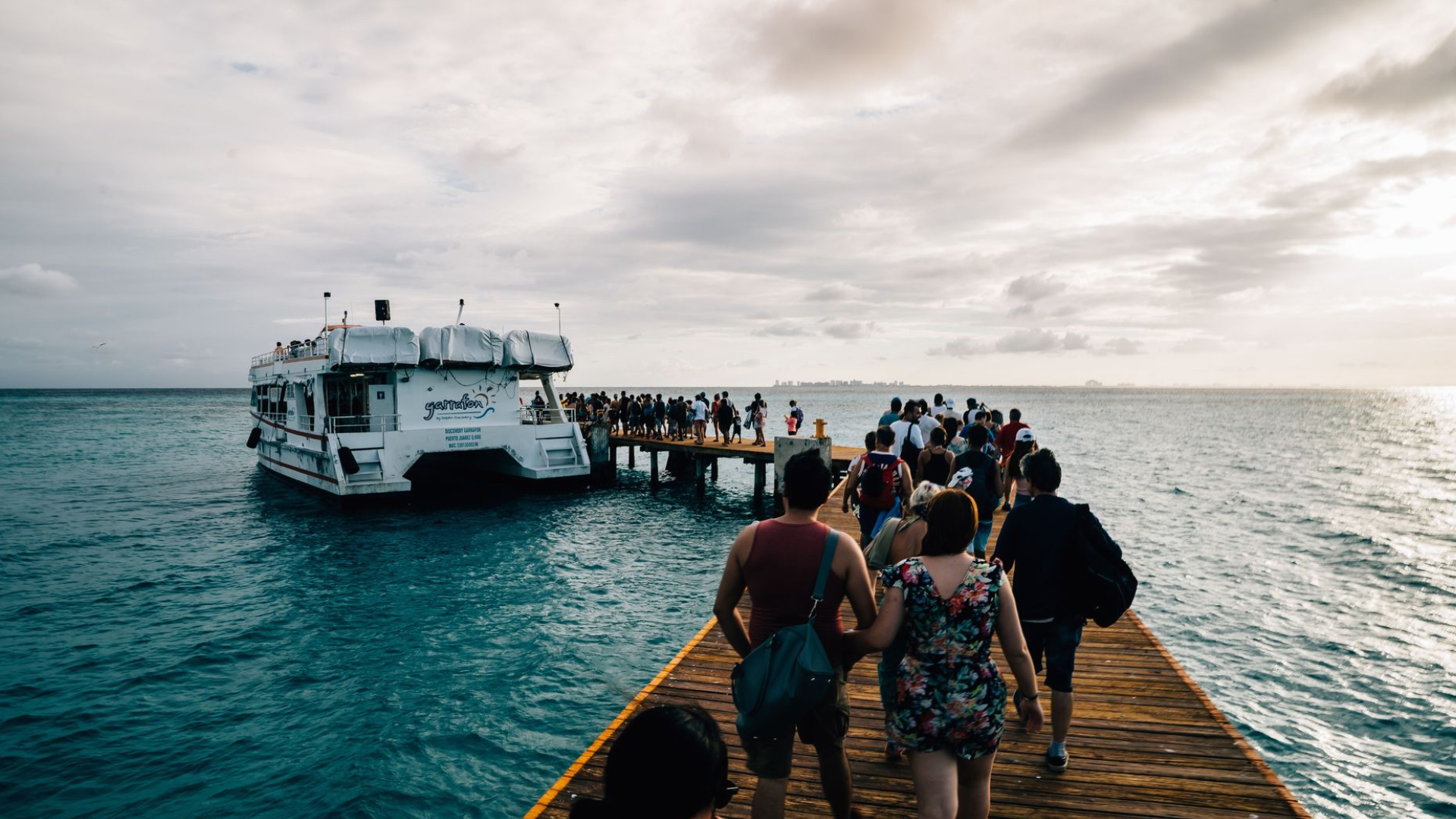
We tend to see the airport, airline, road, ferry and hotel as separate businesses or government responsibilities. The international tourist doesn’t see it that way. They are simply trying to have a holiday.
There is another customer we tend to forget
The same thinking applies to investors.
Someone wanting to build a resort, restaurant, attraction or other tourism business sees one investment decision. They do not care which department owns which permit or which level of government controls which approval. They want to know whether the project works.
For an investor, it comes down to something much simpler: how difficult will this be to build, how long before I can open, and does the return justify the time and risk involved?
The longer a project takes and the more uncertainty there is around it, the harder the numbers become to justify. Eventually, the investor may defer the project or take the money elsewhere.
The tourist experiences friction as inconvenience. The investor experiences it as time, risk and lower returns. Eventually, investor friction becomes visitor friction, because projects that are delayed or never built mean fewer rooms, attractions, restaurants, experiences and supporting infrastructure.
Two customers. One system.
Land, approval and infrastructure delays increase uncertainty and hold up investment.
Hotels, attractions and services open later—or not at all.
Less choice; constrained supply can raise costs and weaken the experience.
3AM analysis: a conceptual link between investment delivery and the visitor experience, not a statistical finding.
There have been reforms intended to make investment easier, and those should be acknowledged. The question is not whether something is being done, but whether it is producing results.
The hospitality industry taught me that being busy is not the same as making progress. We can have all the meetings, plans and programs we want. In the end, the guest either has a better experience and the business performs, or it does not.
Tourism should be judged with the same discipline.
Fix the basics first
If Philippine tourism were my hotel, I would concentrate management attention on three things.
The first is access.
I would not try to develop everything everywhere. We do not have unlimited money or resources. I would pick a small number of destinations and tourism hubs with the greatest international potential and focus on making them work properly. Make it easy to fly in, connect, get to the hotel and get around once you are there. Find the biggest points of friction and fix them first.
We cannot fund everything, so spend the next peso where it will make the biggest difference.
The second is infrastructure and investability.
Before we spend more money convincing people to visit a destination, let us make sure the destination is ready for them. Airports, roads, water, sewage, waste and reliable power are not glamorous, but without them tourism does not work.
Then make it easier for people to invest. Hotels, restaurants and attractions do not build themselves. Investors need a clear process, reasonable timelines and some certainty about what they are getting into.
And measure what actually gets built, not what gets announced. An investment only matters when the money is spent, the doors open and tourists can enjoy it.
The question I keep coming back to is opportunity cost. With limited money, time and management attention, are we giving the biggest constraints enough priority? Recognition and visitor facilities have their place. The test is whether access, infrastructure and investment delivery are improving too.
The third basic is accountability and continuity.
This may be the hardest part because so much of tourism sits outside DOT. PIDS makes much the same point. Many of the things holding tourism back simply cannot be fixed by DOT alone. [8]
It would be unfair to blame DOT for airports, roads, ports, utilities, investment approvals and what happens at the local government level. Much of that is outside its control.
But that leaves us with a bigger question: who owns the overall result?
When I was a hotel GM, the buck stopped at my desk. Engineering, Sales, Housekeeping, Finance and F&B—all had their own responsibilities, but I was still responsible for how the hotel performed. I couldn’t tell the owner we missed budget because Engineering had one problem, Sales had another and Housekeeping had another. Those explanations might all be true. We still missed budget.
And the guest cared even less about our organization chart. If something did not work, it was our problem.
Tourism is far more complicated than running a hotel. A GM can direct departments in a way that a tourism agency cannot direct other agencies or local governments. Accountability therefore needs more than a name against a target. Whoever coordinates the effort needs the authority to secure delivery commitments, resolve blocked decisions and report what has actually been completed. The responsibilities can be shared; the gaps between them still need an owner.
The other thing we need is continuity. Airports, roads, destinations, hotels and international routes take years to develop. We cannot keep starting again every time the people at the top change.
That doesn’t mean sticking with something simply because we started it. Measure it. If it is not working, change it or stop it. If it is working, keep going and give it time to compound.
Measure what matters
I would start with three simple questions. Are enough international visitors coming? Are we gaining ground on our competitors or falling further behind? And what are those visitors worth to the economy?
Then look at what is driving those results: how many international seats we have, how many direct routes, how long it takes to reach our key destinations, whether the airports and infrastructure can handle the demand, how long it takes to get a tourism project approved and, most importantly, how much money is being invested.
These tell us whether we are making progress. But sooner or later, the results have to show up in the numbers that matter.
We should not congratulate ourselves because one measure improved while we continue to fall behind our competitors. And we should not explain away a bad result by finding another number that looks better.
Measure delivery and tourism performance
- Direct international routes; international air seats
- Journey time; airport capacity
- Project approval time; capital actually deployed
- Rooms and attractions under construction; destination infrastructure readiness
- International arrivals
- International tourism receipts; spend per visitor
- Length of stay; repeat visitation
- Regional market share
3AM proposed measurement framework, not statistical findings. The columns are separate sets, not row-by-row causal pairs. Define coverage and reporting periods before use. International tourism receipts should not be substituted for PSA inbound tourism expenditure without checking coverage. Capital deployed is tracked once, as a delivery measure. Regional market share requires a consistent market definition and comparable data.
Perhaps the answer is less exciting than we think
In hospitality, struggling hotels are rarely turned around by one brilliant idea. More often, you go back to the basics, fix what has not been working and spend your money where it will make the biggest difference. Then you keep at it, day in and day out.
I think Philippine tourism deserves that same persistence. We have plenty of reasons for people to visit. We need to get much better at making it easy for them to come.
Source Notes
- Philippine arrivals. Tourism Promotions Board, Headlines, first quarter 2020, “2019 Philippine Tourism Industry Performance” (8.26 million international visitors). TPB 2019 tourism performance Department of Tourism, Philippine Tourism Data Dashboard, Visitor Arrivals, year 2025, Grand Total, accessed 26 September 2026: 6,484,060 visitors, including 543,085 non-resident Filipinos; foreign visitors are 5,940,975 by subtraction. Source data: Bureau of Immigration and eTravel. Non-resident Filipinos are Philippine passport holders permanently residing abroad, formerly termed overseas Filipinos. DOT visitor-arrivals dashboard
- Philippine Statistics Authority, “Tourism Contributes 8.1 Percent to the Philippine Economy in 2025,” release 2026-160, 28 May 2026. Tables 1.1–2.2, 7.1–7.2 and 10.1 support the expenditure, employment and GDP figures. Employment is persons employed in tourism industries; GDP share is tourism direct gross value added. PSA tourism satellite account
- John Paolo R. Rivera, Marga Clarence P. Bolalin and John Joseph S. Ocbina, Philippine Tourism Sectoral Review (2000 to 2025): From Promise to Power—Accelerating the Philippines’ Tourism Transformation toward Sustainability, Competitiveness, and Inclusion. PIDS Discussion Paper 2025-43, December 2025. See the abstract and sections on expenditure, infrastructure and competitiveness. PIDS sectoral review The exact Rivera quotation is from PIDS, “Strong demand, but structural challenges constrain PH tourism growth,” 24 March 2026, reporting the 18 March webinar. PIDS webinar report
- Singapore Tourism Board, Business Improvement Fund (technology, productivity and business-model support); Grants (including Business Events in Singapore and Experience Step-Up Fund). STB Business Improvement Fund Singapore Tourism Board, Grants. STB grants Melissa Ow, Chief Executive, STB, speech at Tourism Industry Conference 2025, paragraph 23 (receipts expected to grow faster than arrivals). STB Tourism Industry Conference speech
- Singapore Tourism Board, Tourism 2040 Factsheet, 2025, “Growing MICE Tourism”: MICE visitors spend almost twice as much as leisure visitors; STB aims to triple MICE tourism receipts by 2040. STB Tourism 2040 factsheet
- BPS Provinsi Bali, “Kunjungan wisman langsung ke Bali Jan–Des 2025 naik, dengan Australia menjadi negara asal terbanyak,” 2 February 2026. Reports 6,948,754 direct foreign tourist arrivals in January–December 2025. The Bali and Philippine figures have different coverage; the body makes a scale comparison, not a like-for-like national ranking. BPS Bali 2025 arrivals and flights
- BPS Provinsi Bali, same release as note 6, 2 February 2026. Reports 39,115 international flight departures through I Gusti Ngurah Rai Airport during January–December 2025. Departures are flight movements, not routes or passenger arrivals. BPS Bali 2025 arrivals and flights
- PIDS, “Strong demand, but structural challenges constrain PH tourism growth,” 24 March 2026. Rivera explicitly identifies constraints beyond a single agency’s mandate and calls for a whole-of-government approach. See also Discussion Paper 2025-43 in note 3. PIDS webinar report
Sources and definitions for the visuals
Visual 1 retains the comparison years printed in the graphic: 2024 for Malaysia and Indonesia; 2025 for Thailand, Vietnam and the Philippines. These are national series with differing definitions, not a uniform 2025 ranking. Changes are rounded relative to 2019. Philippine figures are sourced in note 1.
Thailand: Tourism Authority of Thailand, TAT Review, first quarter 2020, p. 35 (2019: approximately 39.8 million). TAT Review, first quarter 2020
Thailand: TAT, “TAT sets Thailand Tourism Next for value growth plan,” 12 January 2026 (2025: 32.97 million, shown as 33.0 million). TAT 2025 arrivals and value-growth plan
Malaysia: Tourism Malaysia, Malaysia Tourism Key Performance Indicators 2024 (2019: 26,100,784; 2024: 25,016,698 tourist arrivals, excluding excursionists). Tourism Malaysia 2024 indicators
Vietnam: Government News, “Foreign arrivals soar to record high in 2025,” 6 January 2026, citing the National Statistics Office (nearly 21.2 million; 17.8% above 2019). Vietnam Government News: 2025 arrivals
Indonesia: BPS–Statistics Indonesia, International Visitors Expenditure Statistics 2024, 24 March 2025, section 2.1 (13.90 million arrivals; 86.31% of the 2019 level). BPS international visitor expenditure statistics
Visuals 2 and 3 are 3AM analysis and a proposed measurement framework, respectively, not statistical findings. In Visual 3, international tourism receipts are a proposed measure; they should not be substituted for PSA inbound tourism expenditure without checking coverage. Capital deployed is a delivery measure. The framework does not treat the same investment spending as a separate tourism-performance outcome.