Hotel Management Company or Owner-Operated Hotel?
Issue 06 | September 2026
A periodic publication by 3AM Hospitality Consultants.
What owners considering an independent hotel need to understand about brands, operations, and competing for guests.
One of the misconceptions I encounter with hotel owners is that staying in hotels prepares you to operate one.
It is understandable. You have travelled, stayed in good properties, and developed strong opinions about beds, breakfast, service, and design. You know what you like. You may even know exactly what you would do differently.
Then you must deliver it every day.
Take cleaning a room. Most people think they understand it because they clean their own bedroom. In a hotel, the expectation is that the room should feel as though nobody has ever slept in it before.
Someone has to establish that standard, provide the right equipment, train the team, allow enough time, and inspect the result. The same applies to every room, including when the hotel is full and two staff members have called in sick.
The guest sees a clean room. The owner is responsible for the operation that makes it possible.
That gap between experiencing a hotel and delivering one is where this conversation should begin — and where an independent hotel consultant's work actually starts.
Hotel Operator vs. Hotel Management Company
"Hotel operator" and "hotel management company" are often used interchangeably. A management company can be the operator, so treating them as opposing choices can cause confusion.
The distinction I want to discuss is between a brand-managed hotel and an independent, owner-operated hotel.
In a brand-managed hotel, the owner appoints the brand company to operate the property under a management agreement. During my time at Starwood Hotels & Resorts, I experienced this model firsthand.
Starwood offered both managed and franchised arrangements. A hotel carrying one of its brands was therefore not necessarily operated by Starwood itself. The name above the door does not, by itself, identify who runs the hotel.
In an independent, owner-operated hotel, the owner operates through their own general manager and leadership team, under a brand they own. That brand may already exist, or they may develop it specifically for the property.
"Independent" describes the brand position. "Owner-operated" describes who runs the business. An independent hotel can also appoint an external management company.
These are two selected models, rather than the only choices available. This article is primarily for owners leaning toward independence and operating through their own team.
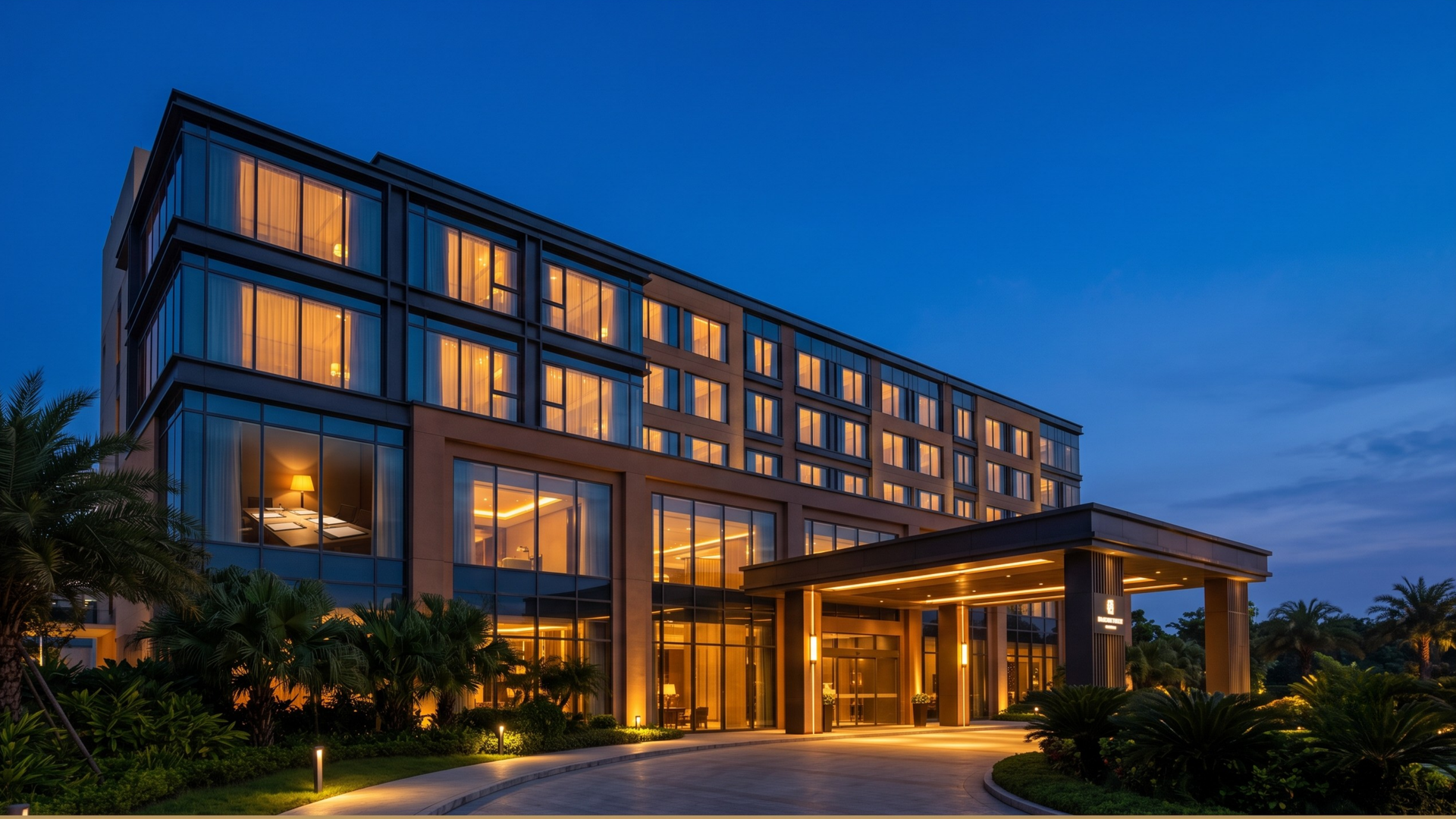
Image from Capella Bangkok (www.capellahotels.com)
What Are You Buying From a Brand?
When owners consider a brand-managed hotel, they are often looking for recognition, distribution, loyalty business, established systems, and someone to take day-to-day responsibility.
My time at Starwood gave me a real appreciation for those capabilities. I valued Starwood Preferred Guest (SPG), the central marketing delivery, and the support behind the brands. I also appreciated the emphasis on innovation.
That experience informs how I advise owners today. An owner choosing independence needs a credible plan for attracting guests, earning their loyalty, and supporting the hotel team. Those responsibilities do not disappear simply because you choose your own brand.
Distribution and loyalty benefits can also be available through franchise arrangements. Owners should assess brand affiliation and management responsibility separately, even when one proposal packages them together.
During a difficult market, the reach of an international distribution network and loyalty programme may become particularly important. I would look closely at that advantage for a hotel dependent on international demand.
I would make a different assessment for a property whose business is largely domestic, particularly where the location already gives it a strong reason to be chosen.
The trade-off is that the owner joins a structure. There will be requirements, costs, and decisions they cannot approach entirely on their own terms. The extent depends on the agreements.
Some owners are comfortable with this. Others discover that they want more say over specifications, suppliers, the guest experience, or where marketing money is spent.
Neither preference settles the business case. But an owner who is fundamentally uncomfortable with the brand's structure is unlikely to become more comfortable once the hotel is operating.
Independence offers another route. It also brings a steep learning curve if the owner does not have experienced support.
Why Should a Guest Choose Your Hotel?
Freedom Still Needs Standards
Occasionally, an owner's frustration with a brand comes down to a specification they cannot see the value in.
Bedding is a useful example. For a property in a warm Asian destination, I would question whether a down-feather duvet is the most appropriate choice, taking account of the room environment and guest expectations. We might specify a lighter duvet suited to tropical conditions instead.
The question is whether the bed delivers the comfort the hotel has promised, with a specification suited to its setting.
I take the same approach to other standards. What does this choice contribute to the guest experience? What does it cost to provide and maintain? Can the team deliver it properly?
Those questions help an owner spend deliberately. They do not remove the need for quality.
Once you have decided what the experience should be, you have to make it teachable. Standards, manuals, job descriptions, and training give the team a common understanding of what is expected.
Then you audit the experience.
If there is a gap, the general manager and leadership team must correct it. Advisors can help identify the problem and recommend an approach, but the hotel's leaders remain responsible for delivery.
The owner must also allow the general manager to manage. If agreed standards and budgets are repeatedly overturned, the team cannot be held accountable for the result.
Owner control works best when decision rights are clear. Constant intervention can undermine the very
What This Looks Like at Alino
At Alino Hotel in Quezon City, the idea of Alagang Filipino gives direction to the experience.
The brand architecture expresses a promise of "Care in Every Detail," grounded in "The Basics, Done Well." That gives us a useful test for decisions: how will the guest actually feel the care?
The arrival experience provides a simple answer.
Guests receive a warm Filipino welcome, a curated welcome drink, and nostalgic local sweet treats. The team shares the story behind the local art. This is already in place at the hotel.
The welcome introduces something of the Philippines through taste, conversation, and the surroundings. It gives the team a way to express the brand from the beginning of the stay.
The development work has extended into pre-opening, amenities, curated local tours, the art programme, restaurant menus, cocktails, coffee, and F&B training. Behind those experiences are manuals, job descriptions, and operating standards.
Owners often see the welcome drink or the menu. There is considerably more work involved in making those choices fit together and preparing people to deliver them.
Alino illustrates how a brand idea becomes an operating brief. The ongoing test is whether guests value the experience enough to return and recommend the hotel.

You Also Have to Bring In the Business
An independent hotel needs a clear approach to distribution.
Build a website that tells guests why they should stay and makes it easy to book. Support it with search engine optimization and paid search where appropriate. Work with online travel agencies and travel partners, while developing a strategy to grow direct business.
The right balance will vary by hotel.
I look at revenue per available room, or RevPAR, and the Revenue Generation Index, or RGI, which compares the hotel's RevPAR with its competitive set. I also look at the cost per channel. Direct business has a cost, just as OTA business does.
Owners do not need to become specialists in every commercial metric, but they do need to know whether the strategy is producing worthwhile business. Revenue measures need to be considered alongside acquisition costs and overall profitability.
This is also where brand affiliation deserves an honest assessment. An established network may provide access to demand that would take an independent hotel time and money to develop. How valuable that access is depends on the property, its market, and its guests.
A brand's reach is an advantage to evaluate. It should not become an assumption that a weak location or an unclear product will somehow work.
Make Sure the Hotel Can Withstand Disappointment
An opening budget is only part of the commitment.
Before proceeding, ask what happens if demand is weaker than expected. Can the owner fund a slower start while maintaining the standards that give guests a reason to return?
A hotel that only works under optimistic assumptions needs more thought.
The same question applies to an existing property planning a repositioning. Changes take money and management attention, and the expected business may take time to arrive.
There is a dangerous cycle here: revenue disappoints, the owner cuts the resources needed to deliver the experience, and the hotel becomes less compelling to guests.
Independence should therefore be assessed against both the opportunity and the owner's capacity to absorb setbacks. Enthusiasm for the concept cannot substitute for that assessment.

Know What You Need Help With
For a new hotel, the greatest opportunity is to address these questions early.
The experience you intend to deliver will affect layouts, equipment, staffing, systems, and costs. Once those decisions are poured into concrete, some become expensive to change.
For an existing hotel, start with what is actually happening. Why do guests book? What do they value? Where does the experience fall short? What is the team capable of delivering, and what needs to change?
In either case, owners should be honest about the expertise they already have.
You may understand the investment and have a strong vision for the property. You still need people who can translate that vision into a functioning hotel, prepare the team, and recognize problems before they become established habits.
When appointing a management company or an advisor, understand what they are paid to do, which decisions they control, and how their work will be assessed. Responsibility should be explicit.
The opportunity in independence is substantial: a brand that belongs to you, an experience shaped around your guests, and the flexibility to make decisions for your own property.
But the freedom only becomes valuable when the hotel delivers.
Where 3AM Comes In
At 3AM, we help owners assess whether independence fits their property and their own way of working. Where it does, we help develop the brand experience and the operating capability to deliver it.
Our role can include brand and experience development, pre-opening, operating standards, training, and ongoing advisory oversight. The general manager and leadership team run the hotel.
The aim is a hotel with a clear reason to be chosen, supported by people who can deliver on that reason every day.

Image from Capella Bangkok (www.capellahotels.com)
Frequently Asked Questions
What is the difference between a hotel operator and a management company?
In practice the two terms are often used interchangeably, since a management company is usually the operator. The distinction that matters more is between a brand-managed hotel, where the owner appoints a brand company to run the property, and an independent, owner-operated hotel, where the owner's own general manager and leadership team run it under a brand the owner controls.
Can a hotel have both an operator and a management company at once?
Yes. A brand can offer both managed and franchised arrangements, so a hotel carrying a brand's name is not necessarily operated by that brand company itself. The name above the door does not, by itself, tell you who is running the hotel.
Do I still need a management company if I've hired a hotel consultant?
Not necessarily. An independent hotel can operate through its own general manager and leadership team, with a consultant advising on brand experience, standards, and pre-opening — rather than a separate management company running day-to-day operations.
Is 3AM a hotel operator, a management company, or neither?
Neither. We are an independent, owner-side advisor. We help owners assess whether independence fits their property, then develop the brand experience and operating standards — but the general manager and leadership team run the hotel
How do I decide between self-operating and hiring a management company?
Start with two questions: why should a guest choose your hotel over the alternatives, and can you fund the standards you're promising even through a slower start? Your comfort with joining a brand's structure, and whether your business depends on international or domestic demand, should guide the rest.
About the Author
Paolo Campillo is the Managing Partner of 3AM Hospitality Consulting, an independent, owner-side hotel consultant and hospitality advisory firm in the Philippines. His experience includes working with Starwood Hotels & Resorts. He advises hotel owners and developers on brand experience, development, pre-opening, and operational performance, helping translate their vision into hotels with a clear identity and consistent guest experience.
Is Your Hotel Underperforming?
Before committing further capital—or replacing another senior executive—an independent diagnostic can establish whether the hotel primarily needs renovation, repositioning or an operational reset.
For an independent owner-side perspective, contact 3AM Hospitality Consulting.
Disclaimer
This article shares general hospitality perspectives. The appropriate brand and operating model depends on each hotel's market, ownership objectives, and circumstances.