
The Sea of Sameness
Issue 02 | July 2026
A periodic publication by 3AM Hospitality Consultants.
In the Age of the Algorithm, the Greatest Luxury Is What You Can’t Copy and Paste
I was sitting in a beautifully designed third-wave coffee shop, sipping an espresso, when someone at the next table ordered an iced oat milk latte.
I looked around.
Polished concrete. Light timber. Hanging plants. Ceramic cups. Soft jazz. MacBooks open on almost every table.
It was nice.
That was the problem.
I couldn’t tell whether I was in Manila or Melbourne.
Somewhere along the way, everything had started to look like everywhere else.
Over the past three decades in hospitality, I’ve been fortunate to work with remarkable owners, brands and destinations across Asia. During that time, I’ve watched our industry become more connected than ever before.
Ideas that once took years to travel now move in seconds.
Ideas spread faster. So do trends. So do expectations.
Hotels borrow from hotels. Restaurants borrow from restaurants. Coffee shops borrow from coffee shops. Before long, what was once distinctive becomes the new bland.
Commercially, it makes perfect sense.
Emotionally, something gets lost.
For hotel owners, familiarity often feels like the safer choice.
A proven concept is easier to explain to investors, easier to benchmark and easier to finance. Consultants can point to comparable properties. Designers can show that something similar has already worked. Operators can reassure everyone that guests know what to expect.
No one gets blamed for choosing the familiar.
The problem is that all those safe decisions add up. What emerges may be polished and perfectly Instagram-worthy, but it still feels much like every other hotel.
Cookie-cutter hotels are rarely created by a lack of talent. They are created by an accumulation of rational, defensible decisions.
A lobby inspired by one successful hotel. A restaurant concept borrowed from another. A guest journey pieced together from places the owner has visited.
Nothing is necessarily wrong with any individual decision.
But the finished hotel could be almost anywhere.
And if it could be anywhere, guests have little reason to choose it over somewhere else— except price, points or convenience.
Algorithms accelerate this sameness. They learn from what people have already clicked, liked, booked and shared. They reward recognisable patterns because familiarity reduces uncertainty.
What succeeds is noticed. What is noticed is repeated. What is repeated becomes a formula.
But what performs well on a screen does not always create meaning in person.
A hotel can photograph beautifully, earn excellent reviews and still leave almost nothing behind. Guests may have been perfectly satisfied but struggle to remember anything distinctive about it six months later.
Satisfaction and memory are not the same thing.
I understood this more clearly one morning at Amanjiwo in Central Java.
Before sunrise, my butler quietly woke me with a hot espresso and a warm croissant. While most guests were still asleep, we drove to Borobudur before the gates opened.
We climbed in near silence as the first light broke over the ancient temple.
On the way down, he shared stories no guidebook could have told. We returned through the surrounding villages as the landscape slowly came to life.
As we drove back, it struck me that although others could follow the same itinerary, no one would experience that precise combination of place, people, timing and feeling in quite the same way.
That morning was mine.
Its value did not come from extravagance alone. It came from how completely the experience belonged to where it happened.
The hotel did not compete with the destination.
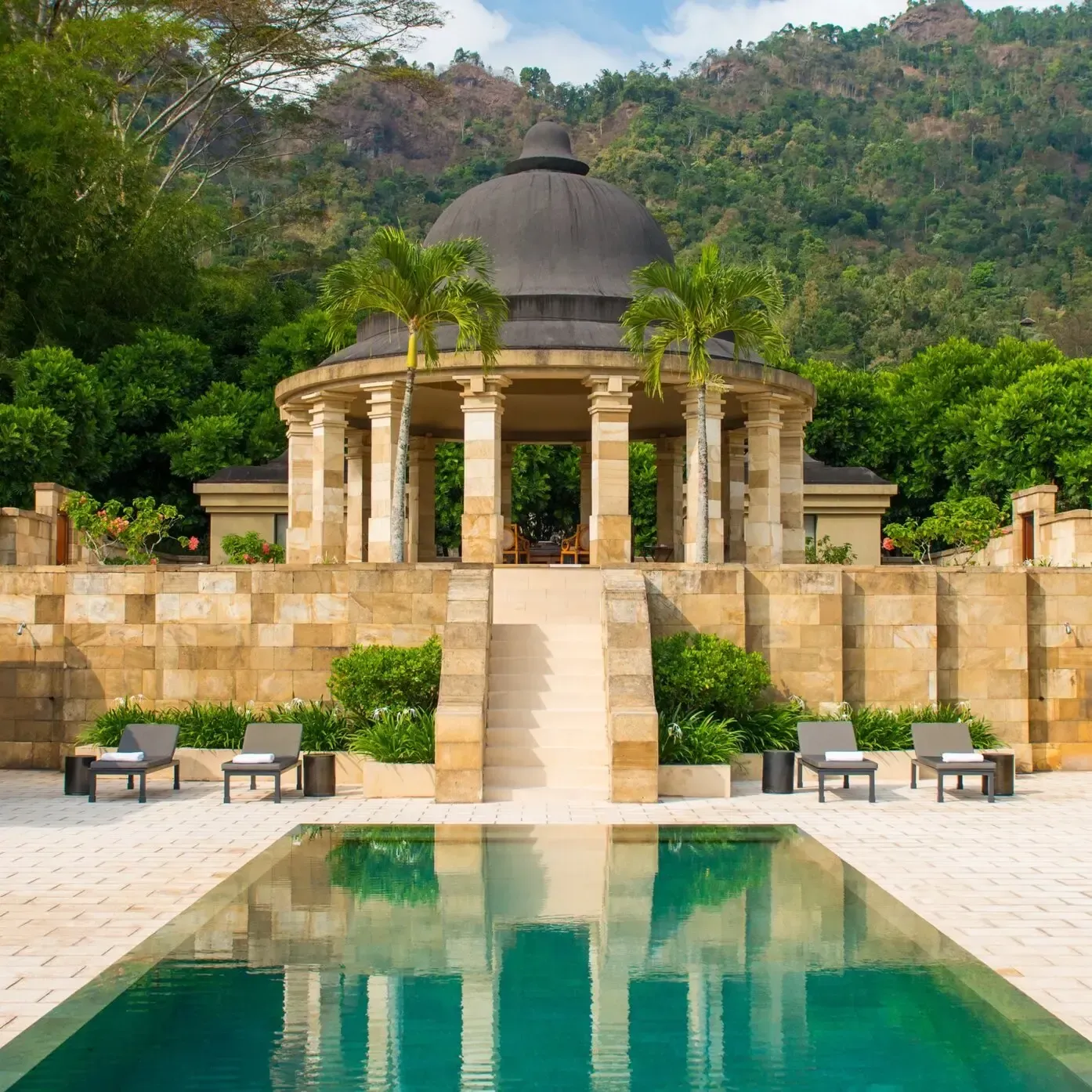
Image from Amanjiwo (www.aman.com)
It helped me experience the destination more deeply.
That distinction matters.
Distinctiveness does not mean novelty for novelty’s sake. A hotel does not become original simply by being unusual.
Nor does it become authentic by adding local artwork, regional ingredients and a few decorative references to culture after the concept has already been imported from somewhere else.
That may make a hotel look local.
It does not necessarily make it belong.
A hotel that truly belongs becomes part of the fabric of its community. It draws local people, culture and experiences into the stay, allowing guests to discover the destination in a way that feels personal to them.
The hotel becomes more than a place to stay. It becomes the lens through which the guest connects with the destination.
It feels inseparable from its surroundings—not like an international concept wearing a local costume.
This changes the question owners and developers should ask:
What could this hotel help a guest experience here that could not happen anywhere else?
The objective is not to be different for the sake of it. It is to create something so distinct that
comparing it with another hotel becomes slightly absurd.
Consistency still matters.
Guests should never have to gamble on cleanliness, safety, competence or care. Owners need reliable systems. Associates need clear expectations. Hotels need a recognisable philosophy.
But consistency does not require replication.
Great hotels do not need to standardise experiences. They need to standardise the principles behind them.
The principle might be a thoughtful arrival. The expression should depend on the property.
The principle might be genuine recognition. The gesture should depend on the guest.
The principle might be a sense of place. The experience should grow from what that particular place can offer.
This is more demanding than repeating a successful formula. It requires every hotel to interpret the same philosophy rather than reproduce the same answer.
Capella Bangkok showed me what this can achieve.
What stayed with me was not simply the suite or the amenities. The hotel understood how I wanted to experience Bangkok and interpreted the city around my interests and curiosity.
I left wanting to visit every Capella in the world.
Not because I expected each hotel to feel like Capella Bangkok. Quite the opposite. I wanted to discover how the same philosophy of hospitality might express itself somewhere entirely different.
That is the commercial power of standardising principles rather than experiences. Guests come to trust the philosophy without already knowing what each hotel will feel like. Technology can make hotels easier to find, book and navigate. It can eliminate queues, remember preferences and automate routine transactions. Used well, it returns time to guests and associates.
But efficiency is not the purpose of hospitality.
Repeating information, waiting unnecessarily or navigating a confusing process adds nothing to the experience. Yet other moments—a thoughtful welcome, being shown to your room or a conversation that reveals something about the destination—deserve time.
Remove friction where it creates anxiety.
Preserve ritual where it creates meaning.
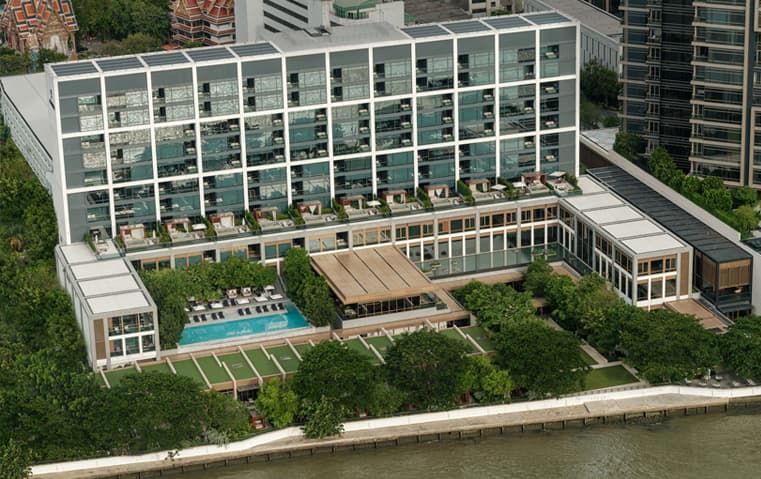
Image from Capella Bangkok (www.capellahotels.com)
A completely frictionless hotel may be operationally impressive but emotionally bankrupt.
When hotels compete mainly through specifications, guests compare them through specifications: room size, facilities, location, loyalty points and price.
Competitors can renovate. They can add amenities. They can introduce the same technology or discount their rates.
Most functional advantages can eventually be copied.
A meaningful experience is harder to reproduce because it depends on the relationship between place, people, timing and story.
Memory has commercial value. It gives guests a reason to return, a story worth sharing and less reason to choose on price alone.
At its best, it also stirs curiosity: how might I experience another destination through the
same philosophy?
The difficulty for owners is that this value rarely fits neatly into a feasibility study.
A spreadsheet can tell us exactly what a feature costs. It is less helpful in telling us what a memorable experience is worth. The danger is that anything difficult to measure begins to look unimportant.
Guests rarely make that mistake.
Hospitality is the intentional design of the human experience.
In the age of the algorithm, the greatest luxury is what you can’t copy and paste.
About the Author
Paolo Campillo is Managing Partner of 3AM Hospitality Consulting, advising hotel owners and developers on hotel development, operations and long-term value creation.
His philosophy is simple: make better decisions before they are poured into concrete.
Planning a Hotel Project?
Whether you are developing a new hotel or repositioning an existing one, the decisions made today will shape its performance and returns for decades.
If you would value an independent owner-side perspective before committing capital, contact 3AM Hospitality Consulting to start the conversation.
www.3am.com.ph
Disclaimer
This article is provided for general educational purposes and reflects 3AM Hospitality Consulting’s approach to hotel investment and development. It does not constitute investment, financial, legal or tax advice. Every hotel project should be evaluated acc ording to its objectives, assumptions, risks and circumstances.