Menu Development: What a Menu Development Consultant Actually Does
Issue 07 | September 2026
A periodic publication by 3AM Hospitality Consultants.
Someone tells me their restaurant needs a new menu.
My first question is usually:
“Before we talk about the menu, tell me what the problem is we are trying to solve.”
Is it profitability? Menu popularity? Food presentation? Taste? Value for money? Has the menu simply become dated?
Because “we need a new menu” is not really a diagnosis.
And that gets to the difference between asking a chef to build a menu and bringing in a menu development consultant to develop one. The consultant should start a few steps earlier.
It Starts with the Restaurant, Not the Menu
For an independent restaurant, I would ideally start with feasibility.
What will work in this market? Who are we trying to attract? What already exists? Where is the opportunity? What should the positioning be? And do the numbers make sense?
For a hotel or resort, it gets more complicated.
You are not developing one restaurant in isolation. You are programming the hotel’s entire F&B offering.
There will probably be all-day dining. Perhaps a lobby lounge or bar. Depending on the hotel and market, there might be a specialty restaurant, a craft cocktail bar or other concepts.
Each has a different job to do. And each needs to fit within the hotel’s brand story, location and market.
I don’t believe putting a restaurant inside a five-star hotel automatically makes it a good restaurant. A specialty restaurant still has to compete with everything outside the hotel.
Ideally, we test that through proper feasibility work. Only then should we start talking seriously about the concept. And only after the concept is clear should we start developing the menu.
The Designer Shouldn’t Have to Invent the Restaurant
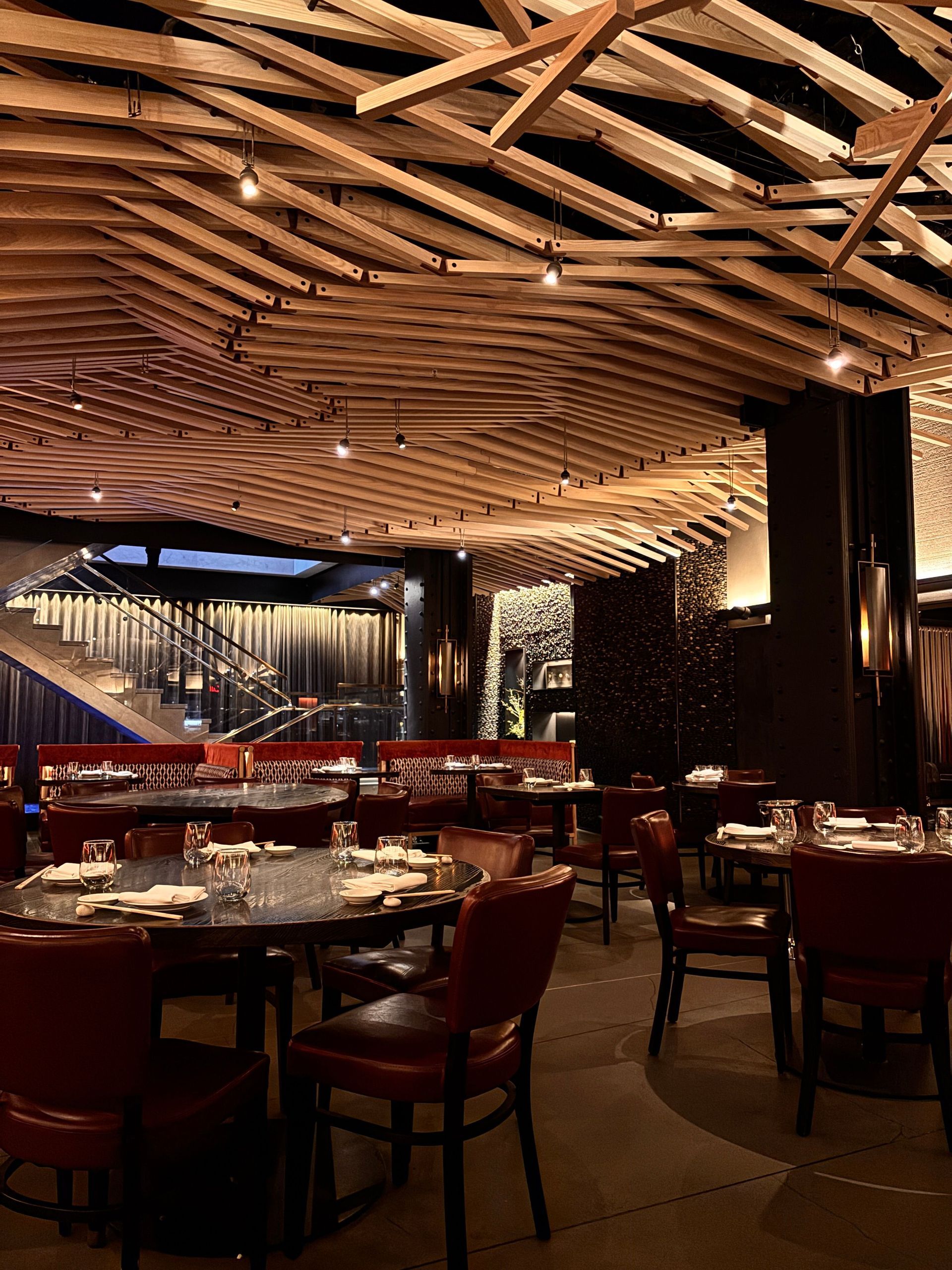
For new developments, we normally want to be involved once the overall F&B space programming is established but before the restaurant interior designer starts work.
There is a simple reason. The designer needs to know what they’re designing.
We first establish the concept: what the restaurant is, who it is for, how it should feel, the type of food and beverage offer, how it should operate and what makes it different. That becomes part of the brief for the designer.
I’ve seen the opposite happen too many times. A beautiful restaurant gets designed and then, somewhere towards pre-opening, an Executive Chef and F&B Director arrive, and everyone starts asking what kind of restaurant should go into it. That’s backwards.
By then, the space is fixed. The kitchen is largely fixed. The capacity is fixed. Major equipment decisions have been made.
The most valuable decisions have already been poured into concrete.
Freedom Within a Framework
Taste Comes First
For all the talk about concepts, feasibility, menu engineering and revenue management, I have one uncomplicated belief about restaurants:
Taste comes first.
Over the years I’ve developed my own slightly unscientific 2½ rule.
There are five basic tastes: sweet, sour, salty, bitter and umami (savoury). My heuristic is simple: two tastes lead, one supports.
Take sweet and sour pork.
Sweet and sour are doing the heavy lifting. Umami plays a supporting role. Aroma, temperature, texture—and that all-important crunch—complete what we experience as flavour.
That’s my 2½. It’s a heuristic, not a culinary law.
Very good chefs seem to understand restraint instinctively. They know when to stop.
The exceptional ones occasionally break my 2½ rule completely and somehow make it work.
I still haven’t figured out why.
Please Don’t Give Me the Chef’s Greatest Hits
Another thing I see too often is an enormous menu without a real point of view.
A bit of Italian. A few Asian dishes. A burger. Some pasta and the dreaded fusion dishes (more like confusion). The chef’s favourite dishes from three previous hotels. I call it the chef’s greatest hits.
The individual dishes may be perfectly good. But what restaurant are we in?
A menu should belong somewhere. It should make sense for the concept, market and location.
It also needs to represent value. And value for money does not mean cheap.
You can spend a great deal on dinner and walk away thinking it was extraordinary value. You can spend very little and feel ripped off.
For me, it comes back to a constant focus on quality. The question isn’t simply whether the market will accept the price. It’s whether what we’re giving the guest is worth it.
And Don’t Forget the Drinks
This is a pet peeve of mine.
You can have a beautifully conceived restaurant, excellent food and great service—and then the beverage programme feels as though someone remembered it two weeks before opening.
Drinks should tell the same story as the restaurant.
For a restaurant, food leads and beverage follows. For a bar, beverage leads and food follows.
I’ve eaten in Michelin-starred restaurants where almost everything was beautifully executed and then finished the meal with a poor cup of coffee. It drives me crazy.
You’ve paid perfect attention to every detail for two hours. Why get sloppy at the end?
Data Matters Too
Creativity doesn’t mean guessing.
If an existing restaurant tells us its menu isn’t performing, we go back to the first question:
What is the problem we are trying to solve?
We use the Smith–Kasavana approach to menu engineering, looking at popularity and contribution margin. It’s useful. But on its own, I think it falls short.
We also use restaurant revenue management, particularly RevPASH—revenue per available seat hour.
Because we’re not trying to optimise one dish on a spreadsheet. We’re trying to improve the restaurant’s performance. Data tells us what’s happening. It doesn’t necessarily tell us what to do next.
That’s where experience, creativity and a little imagination still matter.
Why Not Just Let the Hotel Team Do It?
I’ve spent most of my career working with hotel operations teams. There are some outstanding Executive Chefs, F&B Directors and General Managers out there.
But being good at operating a restaurant and being good at creating one from scratch are different skill sets.
Concept development brings together market understanding, feasibility, creativity, commercial thinking, operations, design and guest experience.
Most hotel teams are strongest operationally. That’s what they’ve spent their careers learning to do.
Even when a hotel brand has strong F&B expertise, it may not have the bandwidth to develop every concept internally. Most of the larger international hotel brands use specialist consultants to ensure that their owners’ restaurants and bars increase their chances of achieving their goals.
There is another problem.
The operating team often arrives too late.
By the time the Executive Chef or F&B Director joins the pre-opening team, many of the decisions that will determine the restaurant’s success have already been made.
That’s why good
restaurant consulting starts much earlier than menu development.
What Does Success Look Like?
Commercial success matters. Owners are investing real money. We need to understand feasibility, ROI, food cost, revenue and the downside if we’re wrong.
But creating something people genuinely want only gives us a fighting chance.
The economics still have to work. What I really want to create are restaurants people will travel for.
Restaurants that become place-makers. Restaurants people talk about.
Good food is the price of entry. The restaurant is more than food.
It’s concept. Story. Location. Design. Menu. Drinks. Service rituals. Music. Atmosphere. People. Connection to the destination.
Which matters most? It depends. There is no formula. That’s what makes this business interesting.
Twenty Years Later
In 2004, I was involved in developing the original concept for what became Spiral at the Westin Philippine Plaza, later Sofitel Philippine Plaza.
The original ambition was straightforward: build the best buffet in Metro Manila.
But during the development process, we realised we were asking the wrong question.
The better question was:
“How do we create a dining experience people would travel for?”
I travelled to Sydney, Seoul and Hong Kong looking at restaurants. Not to copy them.
I wanted to understand why people remembered them. The original idea for Spiral had roughly five authentic food experiences. It eventually became around 21 culinary ateliers across approximately 3,000 square metres. But I don’t think the number of stations was why Spiral worked.
It had Manila Bay sunsets. Theatre. Choice. Abundance. Exploration. Celebration. Social connection. Discovery.
It was an experience. There is another part of the story I still think about.
Early in development, I requested approximately US$60,000 for the concept.
The proposal was rejected. The owners challenged us to think much bigger. The eventual investment grew to approximately US$2 million.
The lesson wasn’t that spending more money produces a better restaurant. It doesn’t.
The lesson was to ask a better question.
Not simply: “What does this cost?”
But: “What value could this create?”
Nearly twenty years later, people still ask me when Spiral is going to reopen.
A few weeks ago, a potential client with a hotel still at feasibility stage asked 3AM to study whether they should create what they called a “Spiral 2.0.”
That’s remarkable (and I use the literal definition, “worth talking about”). Twenty years later people are still talking about the concept.
So, What Does a Menu Development Consultant Actually Do?
Our job is to improve the odds.
Restaurants are risky. No food consultant, chef or operator can guarantee success.
But we can ask better questions before the owner commits capital. Test the market before designing the concept. Get the concept right before designing the space. Use data instead of opinion where data exists. And think about the downside as seriously as the upside.
I think about restaurant development probabilistically. You can’t eliminate risk. But you can structure the bet better.
Heads, we win. Tails, we don’t lose too much.
Menu development is part of that. An important part. But only part of a bigger picture.
Because ultimately, we’re not trying to create a menu.
We’re trying to create restaurants and bars that are REMARKABLE.

About the Author
Paolo Campillo is the Managing Partner of 3AM Hospitality Consulting, advising hotel owners and developers on hotel development, operations, and long-term value creation. His philosophy is simple: make better decisions before they’re poured into concrete.
Planning a Hotel Project?
Whether you’re developing a new hotel or repositioning an existing one, the decisions you make today will shape your returns for decades.
If you’d like an independent owner’s perspective before you commit capital, contact 3AM Hospitality Consulting to start the conversation.
Disclaimer
This article shares general hospitality perspectives. The appropriate brand and operating model depends on each hotel's market, ownership objectives, and circumstances.